

“We are now in the second Gilded Age.”
- Robert Reich, former U.S. Secretary of Labor
What comes next?
Economic Democracy: A Model for a Post-Capitalist Society explores a path toward a fairer, more democratic, and sustainable economy, one that puts people and the planet before profit.
Course Description
Today's world faces growing economic inequality, environmental challenges, and social injustices. While many recognize the limitations of existing economic systems, fewer have encountered a comprehensive alternative. Developed from the ideas of Indian philosopher P. R. Sarkar, Economic Democracy presents a holistic approach to organizing society around collective well-being, local economic empowerment, ethical leadership, and care for the planet.
Throughout this 12-week course, you'll explore how these principles can be translated into practical solutions—from cooperative ownership and economic decentralization to sustainable resource management and democratic participation. Through readings, interactive discussions, and real-world applications, you'll engage with ideas that challenge conventional thinking and inspire possibilities for meaningful social change.

What You'll Learn:
1.Economic Justice: weigh the strengths and limits of capitalism and political democracy, and understand how Economic Democracy works.

2. Ground Economics in Ethics: explore Cardinal Human Values and universal moral principles, and compare them with other approaches to ethics.
3. Share the Earth’s Wealth: understand Cosmic Inheritance, the commons and Neohumanism, and what they mean for building a just society.

4. Build Cooperative, Local Economies: compare private, state and cooperative ownership, and explore cooperatives, local planning, food sovereignty and sustainable farming.
5. Understand Social Change and Leadership: study Sarkar’s Social Cycle, ethical and spiritual leadership, and the principles of an ideal constitution and world government.

6. Compare Paths Beyond Capitalism:
examine other post capitalist alternatives side by side and present your own final project.

Who Is This Course For?
1. Concerned Citizens and Activists: anyone troubled by injustice who wants a constructive vision, not just a critique.

2. Students and Young Adults: those looking for hope and practical tools to shape their future.
3. Cooperative Members and Community Organizers: people building local, democratic alternatives today.

4. Educators and Lifelong Learners: anyone curious about how society could be organized differently.
5. No prerequisites: basic English comprehension is all you need. No prior study of economics or Prout required.
Course Format & Schedule

Meet Your Instructor:
Featuring guest instructors::
-
Nada Khader
-
Ronald Logan
Video Description
Course start & end date: March 6 – May 22, 2027 | Saturdays
Two Live-Session Time Options:

Class Times by Region:
Times shown for March 6, 2027, before the U.S. and U.K. daylight saving changes.

Please note: Times shown are before daylight saving changes. U.S. Pacific evening sessions shift from 3:00 PM to 4:00 PM beginning March 20, 2027.
Not sure what time that is where you are? Check your local time.
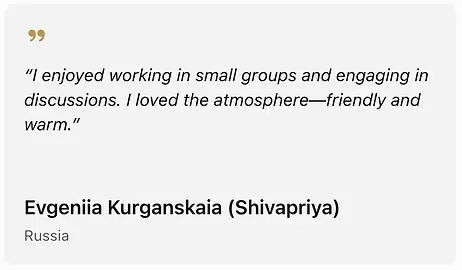
What Students Are Saying:


Course Approach:
Learn Before Class, Engage During Class
This course uses a “flipped classroom.” Before each session, you read and watch short videos on the week’s topic, so class time becomes a lively, interactive discussion rather than a lecture.
Each 90 minute session brings you into conversation with leading thinkers and activists of Economic Democracy from around the world. Together, you apply the concepts to real situations and explore how the economy and government can be redesigned to benefit everyone.
What to expect:
-
Twelve live online sessions on Zoom, 90 minutes each, with course materials in Google Classroom.
-
About 10 pages of reading and one or two short videos (up to 12 minutes each) before every class.
-
Four reflection papers and two discussion board posts.
-
A midcourse reflection and check in during Week 6.
-
A 5 to 7 minute final presentation on an Economic Democracy topic of your choice in Week 12.
-
A self evaluation of the learning objectives at the beginning and end of the course.
-
One on one office hours with the instructor by appointment, Monday to Friday, 9:00 AM to 5:00 PM Eastern Time.
There are no grades. Assignments are marked Complete or Not Yet Complete, and you receive feedback with the opportunity to revise. To complete the course, attend at least eight of the twelve live sessions and submit all required work.
Frequently Asked Questions: See here
Enroll
Enroll now and choose your time zone section below
